Dogs are remarkably good at hiding when something feels wrong. They may still wag their tail, chase a toy, beg for dinner, and act as if everything is perfectly normal – even when a health problem is quietly developing.
That is one of the biggest reasons routine wellness exams matter.
A wellness exam is a preventive veterinary appointment designed to evaluate your dog’s overall health before obvious symptoms appear. Instead of waiting until your dog is sick, injured, or behaving differently, your veterinarian gets an opportunity to look for subtle changes, discuss preventive care, and establish what is normal for your individual pet.
Think of it as a health check-in rather than a repair appointment. Your dog does not need to arrive with a dramatic limp, mysterious rash, or an impressive talent for vomiting on the newest rug.
Regular exams can help your veterinarian identify potential concerns early, when they may be easier to manage.
What Happens During a Dog Wellness Exam?
A wellness visit usually begins with something very simple – a conversation.
Your veterinarian or veterinary team may ask about your dog’s appetite, activity level, drinking habits, bathroom routine, behaviour, medications, diet, and any changes you may have noticed at home.
Even details that seem insignificant can be useful. Maybe your dog suddenly takes longer to get upstairs. Perhaps they are drinking more water than usual. Maybe they have become less interested in breakfast, which is especially suspicious if breakfast used to be the greatest event of the day.
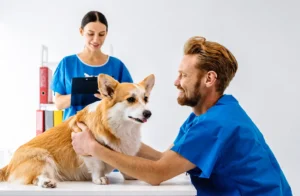
After discussing your dog’s history, the veterinarian performs a physical examination.
A typical exam may include checking:
- Your dog’s eyes, ears, mouth, teeth, gums, skin, coat, heart, lungs, abdomen, joints, muscles, weight, and overall body condition
- Important preventive health needs such as vaccinations, parasite protection, dental care, nutrition, lifestyle risks, and age-appropriate diagnostic testing
The veterinarian may also feel lymph nodes, examine paws and nails, assess mobility, and listen carefully to your dog’s heart and breathing.
The exact examination depends on your dog’s age, breed, lifestyle, medical history, and current health.
Why Are Wellness Exams Important If My Dog Seems Healthy?
This is probably one of the most common questions pet owners have.
If your dog is eating well, playing normally, and apparently feeling great, why schedule a veterinary appointment?
Because “looks healthy” and “has no developing health problems” are not always the same thing.
Dogs cannot tell us that a tooth has started hurting, that they feel slightly stiffer in the morning, or that they have been unusually thirsty for the past three weeks. Some medical problems can develop gradually, and behavioural changes may be subtle enough to go unnoticed.
Routine wellness visits give veterinarians a chance to establish patterns over time.
For example, gradual weight gain may not seem dramatic from month to month. However, veterinary records can reveal a clear upward trend. Changes in heart sounds, dental health, skin condition, mobility, or body condition may also become more meaningful when compared with findings from earlier appointments.
That long-term health history can be extremely valuable.
Wellness Exams Are About Prevention, Not Just Detection
Finding health concerns is only part of the purpose of an exam.
Preventive care is equally important.
Your veterinarian can recommend strategies based on your dog’s individual risks rather than relying on generic advice found online.
A tiny indoor senior dog and a young, highly active dog that spends weekends hiking through forests do not necessarily need identical preventive care.
Vaccination schedules, parasite prevention, nutrition recommendations, dental care, exercise, and screening tests can all vary depending on the individual animal.
This is where professional guidance from a trusted veterinary clinic in Calgary can make preventive care far more personalized than simply following a general checklist.
What About Vaccinations?
Vaccinations are often associated with wellness appointments, but they are only one part of the visit.
Your veterinarian will consider factors such as your dog’s age, vaccination history, lifestyle, travel habits, exposure risks, and existing health conditions before recommending vaccines.
Not every dog necessarily needs exactly the same vaccination plan.
For example, a dog that frequently visits boarding facilities, dog parks, daycare, hiking areas, or other environments with increased exposure to animals may have different risk factors from a dog with a quieter lifestyle.
The goal is appropriate protection based on your dog’s actual circumstances.
Dental Health Is Easy to Overlook
Dog breath is often treated as an unavoidable part of pet ownership.
Sometimes it is simply dog breath.
Sometimes it is a warning sign.
During a wellness examination, your veterinarian can inspect your dog’s teeth and gums for plaque, tartar, inflammation, damaged teeth, or other signs of dental disease.
Dental problems can progress quietly. Dogs may continue eating despite significant discomfort, which means owners sometimes do not realize how serious the problem has become.
Home dental care can certainly help, but attempting to diagnose dental disease yourself by lifting your dog’s lip and declaring, “Looks fine to me,” has obvious limitations.
A professional examination gives you a much clearer picture.
Weight and Nutrition Matter More Than They Seem
A few extra pounds can look harmless, especially when your dog has mastered the art of staring sadly at you while you eat.
Unfortunately, maintaining a healthy weight is an important part of long-term health.
During a wellness visit, your veterinary team can evaluate your dog’s body condition rather than looking only at the number on the scale.
Two dogs can weigh exactly the same amount but have very different body compositions.
Your veterinarian may also discuss portion sizes, treats, feeding schedules, activity levels, and whether your current food is appropriate for your dog’s age and lifestyle.
This is another important part of Calgary pet wellness – looking beyond immediate illness and helping dogs maintain healthier routines throughout different stages of life.
Do Dogs Need Blood Tests During Wellness Exams?
Not every wellness examination automatically requires laboratory testing.
However, your veterinarian may recommend bloodwork, urine testing, stool testing, or other screening based on your dog’s age, health history, symptoms, medications, or risk factors.
These tests can sometimes reveal information that cannot be discovered through a physical examination alone.
This becomes especially valuable as dogs get older.
A senior dog may appear perfectly cheerful while early changes are occurring internally. Routine screening can provide additional information about organ function, blood cells, metabolism, and other important health indicators.
Your veterinarian can determine whether testing makes sense for your particular dog.
How Often Should Dogs Have Wellness Exams?
Many healthy adult dogs benefit from a routine veterinary examination at least once a year.
However, there is no universal schedule that fits every dog.
Puppies usually require more frequent visits during their first months because they are growing rapidly and may need vaccinations, parasite control, nutritional guidance, and developmental monitoring.
Senior dogs may also benefit from more frequent examinations because health changes can occur faster with age.
Dogs with chronic medical conditions, ongoing medications, previous health problems, or specific risk factors may need additional monitoring.
The most appropriate schedule should therefore be based on your veterinarian’s recommendations.
Your Dog’s Behaviour Is Part of the Exam Too
A wellness visit is not limited to ears, teeth, heartbeats, and thermometers.
Behaviour matters.
Changes in sleep, anxiety, appetite, interaction, exercise tolerance, house-training habits, or aggression can sometimes be connected to physical discomfort or medical problems.
Mention these changes during the appointment, even if they seem unrelated to health.
Your veterinarian may discover that what appeared to be “just getting older” deserves a closer look.
Dogs are excellent communicators. Unfortunately, their preferred language includes pacing, scratching, staring at walls, refusing breakfast, and occasionally eating things that were never intended to become food.
Veterinary professionals are trained to put those clues into context.
Why Professional Veterinary Care Matters
The internet can be extremely useful for learning about pet health.
It can also convince you that one sneeze means your dog has seventeen diseases.
Home monitoring has an important role in responsible pet ownership, but it should complement professional veterinary care rather than replace it.
Veterinarians can physically examine your dog, interpret subtle clinical findings, compare health records over time, recommend appropriate diagnostic tests, and build preventive care around your pet’s individual needs.
That is difficult to reproduce with online research alone.
The strongest approach is a partnership: you observe your dog every day, while your veterinary team provides medical expertise and objective health assessments.
Wellness Exams Help Build a Health History
One overlooked benefit of routine exams is continuity.
When your veterinary team sees your dog regularly, they learn what is normal for that particular animal.
They know your dog’s typical weight, previous dental findings, vaccination history, medications, previous illnesses, laboratory results, and changes that have occurred over time.
This creates a medical baseline.
If something changes later, those records can provide important context and potentially make investigation more efficient.
Wellness care is therefore not simply about one appointment. It is about building a useful health history throughout your dog’s life.
Give Your Dog a Healthier Head Start
A wellness exam may look like a simple routine appointment, but it can play an important role in preventive care, early detection, nutrition, dental health, parasite protection, vaccination planning, and long-term health monitoring.
Your dog does not have to be sick to benefit from seeing a veterinarian.
In fact, seeing a veterinarian while your dog appears healthy is exactly the point.
At West Springs Vet, our team can provide personalized preventive care based on your dog’s age, lifestyle, medical history, and individual needs.
Book your dog’s wellness exam with West Springs Vet today and give your four-legged family member the professional care they deserve – before a small concern has the chance to become a bigger one.