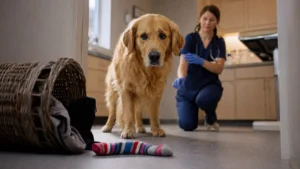
Your dog has a cracked tooth, but dinner still disappears in record time. The tail is wagging, the treat cupboard remains under constant surveillance, and nothing seems particularly wrong. Surely a dog with tooth pain would stop eating?
Unfortunately, appetite is not a reliable dental examination.
A cracked tooth needs veterinary assessment even if your dog is eating normally. Whether it requires monitoring, repair, or extraction depends on the depth of the damage and the condition of the tooth. Some small chips are relatively minor; deeper fractures can expose sensitive tissue and allow infection to develop. Waiting for your dog to refuse dinner can mean waiting too long.
Why Dogs May Keep Eating Despite Dental Pain
Dogs cannot explain that chewing hurts, and discomfort does not always produce an obvious change in behaviour. Some continue eating while favouring the other side of their mouth or avoiding pressure on the damaged tooth.
Changes can be subtle enough to miss, particularly when your dog has always approached meals like a competitive sport. Finishing a bowl tells you that your dog is willing to eat. It does not prove that eating feels comfortable.
Watch for these possible signs of oral discomfort:
- Chewing mainly on one side or taking longer to finish meals.
- Dropping pieces of food while eating.
- Avoiding hard treats or previously favourite chew toys.
- Drooling more than usual or pawing at the mouth.
- Pulling away when you touch the face.
- Swelling around the muzzle or beneath an eye.
Some dogs show no obvious signs at all. That is why a visible fracture deserves attention regardless of appetite.
What a Crack Can Mean Beneath the Surface
A tooth has several layers. Enamel forms its hard outer covering. Beneath that sits dentin, which can become sensitive when exposed. At the centre is the pulp, containing nerves and blood vessels.
A chip limited to enamel may need only professional assessment and monitoring. A fracture extending into dentin can cause sensitivity, even when the pulp remains covered. Damage that exposes the pulp creates a more serious problem because bacteria can enter the tooth.
The visible size of a chip does not reliably reveal its depth. A small damaged area may matter more than its appearance suggests, and a photograph cannot show the condition of the roots.
An untreated fracture can eventually lead to an abscess, with swelling and pain. Arranging an examination when you first notice damage gives your veterinarian an opportunity to identify the problem before it becomes more complicated.
How Soon Should Your Dog See a Veterinarian?
Contact your veterinary team promptly after discovering a cracked tooth. Explain when you noticed it, whether an accident occurred, and whether your dog’s eating or behaviour has changed. The team can help determine how quickly an examination is needed.
Request urgent assessment if your dog develops facial swelling, significant pain, persistent bleeding, or difficulty eating or drinking. Breathing difficulties, major facial trauma, or uncontrolled bleeding require immediate emergency attention.
Avoid postponing the call until the next routine checkup simply because breakfast went well. Your dog’s enthusiasm for food is admirable, but it is not a treatment plan.
For owners seeking pet dental care in Calgary, an examination at West Springs Veterinary Hospital provides an opportunity to discuss the damaged tooth, your dog’s comfort, and appropriate next steps.
What Happens During a Dental Assessment?
The veterinarian will ask about chewing habits, previous dental problems, and possible injuries before examining your dog’s mouth. An awake examination provides useful initial information, but it cannot reveal everything happening beneath the gumline.
A comprehensive dental assessment may require general anesthesia and dental radiographs. These images help the veterinarian evaluate roots and surrounding bone, while anesthesia allows detailed examination and treatment without your dog moving or experiencing the procedure awake.
Before recommending a procedure, the veterinary team will assess your dog’s health and discuss the treatment plan, including appropriate monitoring and pain management.
This is where professional dentistry makes a practical difference. What looks like “just a little chip” in the living room may need a very different approach once the whole tooth has been assessed.
Does Every Cracked Tooth Need to Be Removed?
No. Treatment depends on the individual tooth rather than a universal rule that every fracture means extraction.
A minor enamel chip may be monitored after assessment. For selected fractures without pulp exposure, smoothing or sealing the damaged surface may be appropriate. Monitoring should follow a veterinary plan rather than simply waiting for symptoms.
When the pulp is exposed or the tooth is no longer alive, treatment generally involves extraction or root canal therapy. Root canal treatment removes diseased tissue from inside the tooth and seals the canal, preserving the tooth in suitable cases. A veterinary dental specialist may be needed.
Extraction removes the damaged tooth when preservation is unsuitable or another approach would not offer a good outcome. Most pets function well after an appropriate extraction and recovery. The goal is a comfortable, functional mouth.
Antibiotics, when prescribed, do not replace definitive treatment of an infected tooth. They cannot repair the fracture or permanently eliminate infection sheltered inside a diseased root canal.
What You Can Do Before the Appointment
Your role at home is to reduce unnecessary pressure on the tooth and keep your dog comfortable while arranging care.
- Remove hard chews, bones, antlers, and rigid toys.
- Ask the clinic whether to offer soft food or moisten your dog’s usual kibble.
- Pause tug games and activities that put force on the mouth.
- Avoid poking the fracture, testing whether the tooth is loose, or forcing the mouth open.
- Never attempt to file, glue, fill, or pull the tooth yourself.
- Give medication only as directed by a veterinarian; human painkillers can be dangerous for dogs.
If a procedure is being scheduled, follow the clinic’s feeding and fasting instructions. Home adjustments can help temporarily, but they cannot establish how much damage lies below the surface.
Preventing Another Broken Tooth
Dogs have strong jaws, but their teeth are not indestructible. Hard chewing objects are a recognised cause of fractures, including bones, antlers, and hooves.
A useful screening rule is whether you can make an indentation in a chew with your thumbnail. If you cannot, it may be too hard. This is a practical guide rather than a guarantee: size, chewing style, and supervision still matter. Ask your veterinary team to recommend suitable options for your dog.
Regular oral checks also create opportunities to notice damage early. Once your veterinarian confirms that brushing is comfortable and appropriate, make it part of your dog’s routine. A brief look during brushing can reveal changes that would otherwise remain hidden behind an enthusiastic grin.
Give Your Dog a Comfortable Reason to Keep Eating
A healthy appetite is welcome news, but a cracked tooth still deserves professional attention. Early assessment helps establish whether the tooth can be monitored, protected, or treated before further problems develop.
If you are looking for a veterinary hospital in Calgary, West Springs Veterinary Hospital offers dental care as part of its services.
Noticed a cracked or chipped tooth? Contact West Springs Veterinary Hospital to arrange a dental assessment. Help your dog enjoy the next meal comfortably – because dinner should be a pleasure, not a test of determination.