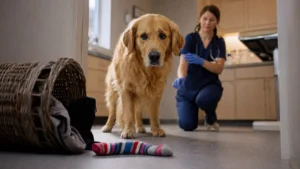
Dogs explore the world with their noses, paws, and, unfortunately, mouths. A puppy may look at a sock and see lunch. An adult dog may decide that a squeaky toy needs an internal inspection. Even the most sensible canine can occasionally make a dining choice that would earn a restaurant a one-star review.
Swallowing a foreign object can be dangerous because the item may become lodged in the esophagus, stomach, or intestines. It can cause choking, irritation, poisoning, internal injury, or a gastrointestinal blockage. Some objects pass without creating a problem, but there is no reliable way to predict the outcome simply by looking at your dog.
Knowing the warning signs and contacting a veterinary professional promptly can make a major difference.
What Counts as a Foreign Object?
A foreign object is anything your dog swallows that cannot be safely digested. The list is limited only by canine creativity. Socks, underwear, rocks, corn cobs, children’s toys, bones, food wrappers, and pieces of rubber are frequent offenders.
Veterinary teams commonly evaluate dogs that have swallowed:
- Socks, gloves, dishcloths, towels, or pieces of fabric
- Balls, squeakers, rubber toys, plastic fragments, or stuffing
- Bones, fruit pits, corn cobs, wooden skewers, or food packaging
- Rocks, coins, jewelry, fishing hooks, or other metal objects
- String, ribbon, dental floss, thread, or rope
- Batteries, magnets, medication containers, or objects containing toxic materials
The size of an object does not determine whether it is safe. A small item can block a narrow section of intestine, while string can bunch or damage the bowel. Batteries may leak corrosive material, and multiple magnets can trap intestinal tissue between them. These situations require immediate professional attention.
Did Your Dog Actually Swallow Something?
Sometimes the evidence is obvious. You see your dog grab a sock, perform the classic “catch me if you can” manoeuvre, and gulp it down before you can intervene. In other cases, the only clue is a mysteriously incomplete toy or a garbage bin that appears to have hosted a private canine buffet.
Look around the area where your dog was playing. Check for damaged toys, missing household items, torn packaging, or scattered debris. If part of an object remains, keep it or take a clear photograph. Knowing the material, approximate size, and missing quantity can help the veterinary team assess the risk.
Do not assume that a dog acting normally is automatically safe. Symptoms may not begin immediately, especially if the object remains in the stomach or creates only a partial blockage. If you witnessed the ingestion or strongly suspect it, call a veterinarian in Calgary without waiting for symptoms to appear.
Common Signs of a Swallowed Foreign Object
Symptoms vary depending on the object’s size, shape, material, and location. A foreign body in the esophagus may cause sudden gagging or difficulty swallowing. An intestinal obstruction may initially cause vague signs and then become progressively more serious.
Watch for:
- Vomiting, repeated retching, gagging, or excessive drooling
- Refusal of food or a noticeable decrease in appetite
- Abdominal pain, tenderness, swelling, or a tense-looking belly
- Lethargy, weakness, restlessness, hiding, or unusual behaviour
- Diarrhea, constipation, straining, or passing very little stool
- Whining, growling, or reacting when the abdomen is touched
- Repeated stretching, pacing, or difficulty getting comfortable
- Pale gums, rapid breathing, collapse, or signs of dehydration
Vomiting is common, but its absence does not rule out an obstruction. A dog with a partial blockage may still eat, drink, and pass some stool. Likewise, diarrhea does not prove that the digestive tract is clear. Material already beyond the blockage can continue to leave the body.
When Is It an Emergency?
Treat the situation as urgent if your dog has trouble breathing, collapses, repeatedly vomits, has a swollen or painful abdomen, cannot keep water down, or develops pale gums. Immediate care is also essential after the ingestion of batteries, magnets, sharp objects, fishhooks, medication, toxic substances, long pieces of string, or anything that could expand inside the stomach.
If your regular veterinary clinic is closed and serious symptoms are developing, contact an emergency animal clinic in Calgary. Time matters because a complete obstruction can reduce blood flow to the intestinal wall. Without treatment, damaged tissue may become necrotic or perforate, allowing intestinal contents to leak into the abdomen.
In short, this is not a good moment to wait for your dog to “sleep it off.” Dogs are excellent companions, but they are not especially reliable medical decision-makers.
What Should You Do at Home?
Remove any remaining objects so your dog cannot swallow more. Keep your pet calm and prevent vigorous activity while you call the clinic. Be ready to describe what may have been swallowed, when it happened, how much is missing, and what symptoms you have observed.
Do not induce vomiting unless a veterinary professional specifically instructs you to do so. Vomiting can be dangerous when an object is sharp, corrosive, large, or already lodged in the esophagus. Home remedies such as oil, bread, bulky meals, or hydrogen peroxide may worsen the situation, delay appropriate treatment, or create new complications.
Never pull visible string, ribbon, or thread from your dog’s mouth or rectum. One end may be anchored farther inside the digestive tract. Pulling it can cause the material to cut through delicate tissue. Keep your dog from chewing the visible portion and seek veterinary care promptly.
How Veterinarians Find the Problem
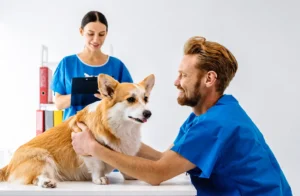
Diagnosis usually begins with a detailed history and physical examination. Your veterinary team may examine the mouth, assess hydration, feel the abdomen, and check for pain or abnormal swelling.
Diagnostic imaging is often necessary. X-rays can reveal many foreign objects or show intestinal gas patterns that suggest an obstruction. However, fabric, plastic, wood, and other materials may not appear clearly on a standard X-ray. Ultrasound, contrast imaging, repeat X-rays, or blood tests may therefore be recommended.
This is one reason professional evaluation is more dependable than monitoring symptoms at home. The object itself may be invisible, but its effect on the digestive tract can still be detected by trained clinicians using appropriate equipment.
How Is a Foreign Object Removed?
Treatment depends on the object, its location, the time since ingestion, and your dog’s condition. In selected cases, a veterinary team may recommend careful monitoring with follow-up imaging. This is appropriate only when the object is considered likely to pass safely and the dog remains clinically stable.
An object in the esophagus or stomach may sometimes be retrieved with an endoscope. This flexible instrument allows the veterinarian to see and remove certain items without abdominal surgery. If an object has entered the intestines, caused a blockage, or damaged tissue, surgery may be required.
Early assessment can create more treatment options. Waiting until a dog becomes severely ill may turn a relatively straightforward retrieval into a more complicated procedure involving damaged intestinal tissue, hospitalization, fluid therapy, and intensive monitoring.
Can You Prevent It from Happening Again?
Choose toys that are too large to swallow and sturdy enough for your dog’s chewing style. Replace damaged toys before they begin shedding pieces. Keep laundry, garbage, children’s toys, medications, batteries, string, and food waste behind secure doors or inside closed containers.
Training cues such as “leave it” and “drop it” are also valuable. Reward-based training can help your dog surrender unsafe items instead of launching a high-speed negotiation around the furniture.
For dogs that repeatedly eat non-food objects, discuss the behaviour with your veterinary team. Persistent scavenging can be related to boredom, anxiety, nutritional issues, gastrointestinal disease, or a behavioural condition called pica. Identifying the underlying cause is safer than simply becoming better at hiding socks.
Prompt Care Protects Curious Dogs
A swallowed object does not always cause an obstruction, but guessing is risky. Call a veterinary clinic whenever you witness an ingestion, notice that part of a toy or household item is missing, or see suspicious digestive symptoms. Professional assessment can determine whether your dog needs monitoring, diagnostic imaging, endoscopic removal, or surgery.
West Springs Veterinary Hospital provides experienced evaluation, diagnostic support, and treatment for pets with gastrointestinal concerns. If you think your dog has swallowed something it should not have, contact the clinic today to arrange prompt care. Your dog may object to having its unusual snack investigated, but its digestive system will appreciate the intervention.